Most fleets focus almost entirely on the technology. The successful ones start with the vision.
What does "the vision" mean for a fleet?
When people hear the word vision, they often jump straight to business outcomes.
- Compliance.
- Cost savings.
- Audit readiness.
- Less paperwork.
And those outcomes absolutely matter. But don’t necessarily motivate drivers.
Vision, in the context of rollout, means:
- What does this change look like for drivers?
- What frustrations disappear?
- What becomes clearer or quicker?
- What feels less like a chore?
Compliance has never been the barrier. The experience has.
Small, practical improvements often matter far more to drivers than strategic outcomes. When driver experience improves, operational outcomes follow naturally.
The conversation that made this clear
Almost every fleet we’ve worked with experiences resistance during a rollout.
- How do you get people to rewire how they work?
- Redesign their routines?
- Let go of familiar habits?
In most cases, the resistance wasn’t because people were unwilling. It was because they didn’t feel seen or included in the process of change. This becomes particularly visible when engaging driver populations.
One fleet manager summed it up well:
“Drivers don’t resist digital checks. They resist being told to change without anyone asking what they need.”
That’s the heart of it.
You can’t force adoption. You can only build it. The rollouts we’ve seen succeed all shared one thing in common: drivers felt involved in the change, not subjected to it. That shift changes everything. Digital inspections stop being something drivers tolerate and start becoming something they prefer over paper.
Because adoption doesn’t come from mandates or compliance targets. It comes from small, consistent signals that say:
“You matter in this process.”
And that’s when the mindset changes from: “I have to do this.” -> “This actually makes my job easier.”
So, what does building the vision look like in practice?
It starts with a conversation ideally before you've committed to any software at all.
Start with the real problem you’re solving – from both sides
For drivers, is it:
- I’ve run out of paper checksheets, but need to deliver my goods
- The quiet worry that reporting something might somehow come back on them?
- Can I trust this vehicle is road worthy?
- Not knowing what actually counts as reportable versus normal wear?
- Defects reported and never visibly acted on — the black hole between the yard and the workshop
For the fleet manager, is it:
- Compliance visibility?
- The gap between a defect being spotted and it being repaired?
- Admin overhead that nobody has time for?
Be honest about which problem you're solving, and for whom. Because drivers will see straight through a change that's dressed up as something it isn't.
Ask the people doing the job
Skip the yes/no questions like “Will you use this app?
Instead ask:
- What’s frustrating about the current process?
- What takes too long?
- What do you worry about getting wrong?
- If something needs reporting, what happens next - and does that feel right to you?
Drivers often have very practical ideas about what would improve the process - they just haven’t been asked.
Define what success looks like
It's tempting to measure success by numbers such as inspection completion rates, percentage of drivers active, defects logged per week. Of course those things matter. But are they a true reflection of success?
A fleet that hits 95% inspection completion, but where drivers are rushing through checks to tick a box hasn't really succeeded. The number looks right. The behaviour doesn't.
We'd suggest defining success with a sentence that captures the why alongside the what. Most fleets start with something like:
"We're rolling out an inspection app and success looks like all drivers completing it daily."
That tells you what's changing. It doesn't tell you what you're solving for or for whom. Compare it to this:
"We want to make reporting a defect easier, with nothing falling through the cracks between the yard and the workshop."
The second statement invites people into the change. The first one simply informs them.
That sentence becomes your anchor. When the rollout gets complicated. When someone pushes back. When a manager starts wondering whether the effort was worth it. You come back to what you're aiming to achieve, your north star so to speak.
From there, yes, build your sub-targets. Track inspections completed, defects reported, resolution times. But don't forget the softer signals:
- Do drivers feel less anxious about reporting a defect?
- Do they leave the yard confident they're driving a safe, roadworthy vehicle?
- If they're stopped at the roadside, can they show exactly what they checked that morning and feel good about it?
Those questions are harder to put on a dashboard. But they're often the truest measure of whether the change has worked.
The bigger picture
These steps sound simple, but they are important as they will shape everything that comes next, from how you choose technology to how drivers experience it on day one.
Get the vision right and the rollout stops being about introducing software. It becomes about designing an experience people actually want to use.
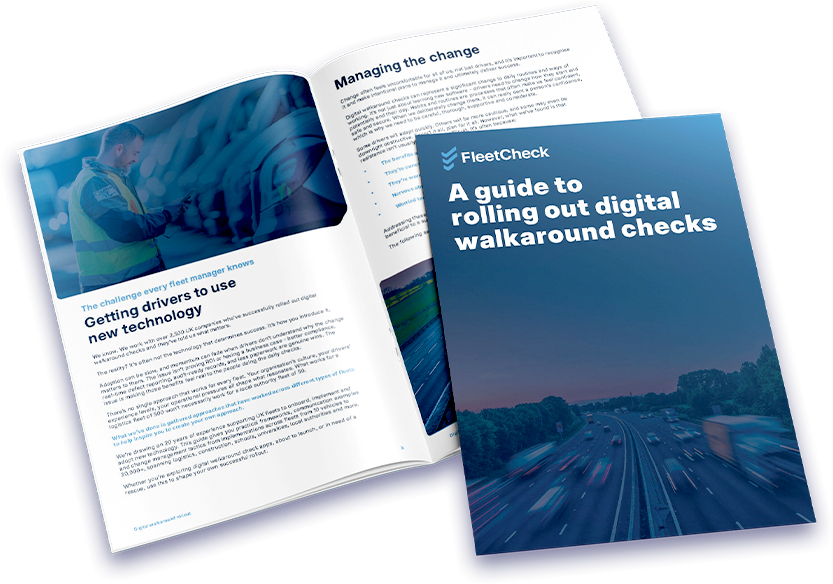
If you want to go deeper into the practical side of this from planning the rollout to driving adoption across driver teams - we’ve put together a detailed guide based on what we’ve seen work across hundreds of fleets.