








Company policies & processes
Minimum legal compliance
- The Management of Health and Safety at Work Guidelines 1999 requires companies to risk assess all their business activities, and that includes any activities that involve driving – whether in commercial vehicles, company cars or employees using their own vehicles. The Health and Safety at Work Act 1974 then requires employers to have a written health and safety policy that includes arrangements for managing those risks.
- Roles and responsibilities must be clearly defined with someone at board level, or similar seniority, having ownership of road risk. That person is responsible for ensuring policies are written, followed, monitored and reviewed. While delegating various risk management tasks is acceptable, it is not possible to delegate overall responsibility for risk management below board level.
- Everything the organisation does to identify and mitigate these risks must be clearly recorded. In the event of a serious incident that led to an investigation by the police or the Health and Safety Executive (HSE), being able to say you carried out your risk management obligations carries no weight whatsoever – you must be able to prove, with documentary evidence, that the right things were done at the right time.
These requirements form the legal foundation of fleet governance. They ensure that basic safety risks are acknowledged and mitigated as far as is ‘reasonably practicable’ and that organisations can demonstrate procedural accountability in the event of an audit or investigation.
Good practice
- Driver safety should be a core component of organisational culture, championed at board level, and actively supported across all departments. This means integrating safety into HR policies, operational procedures, and compliance frameworks, ensuring shared accountability and consistent standards. Policies need to be lived – not laminated!
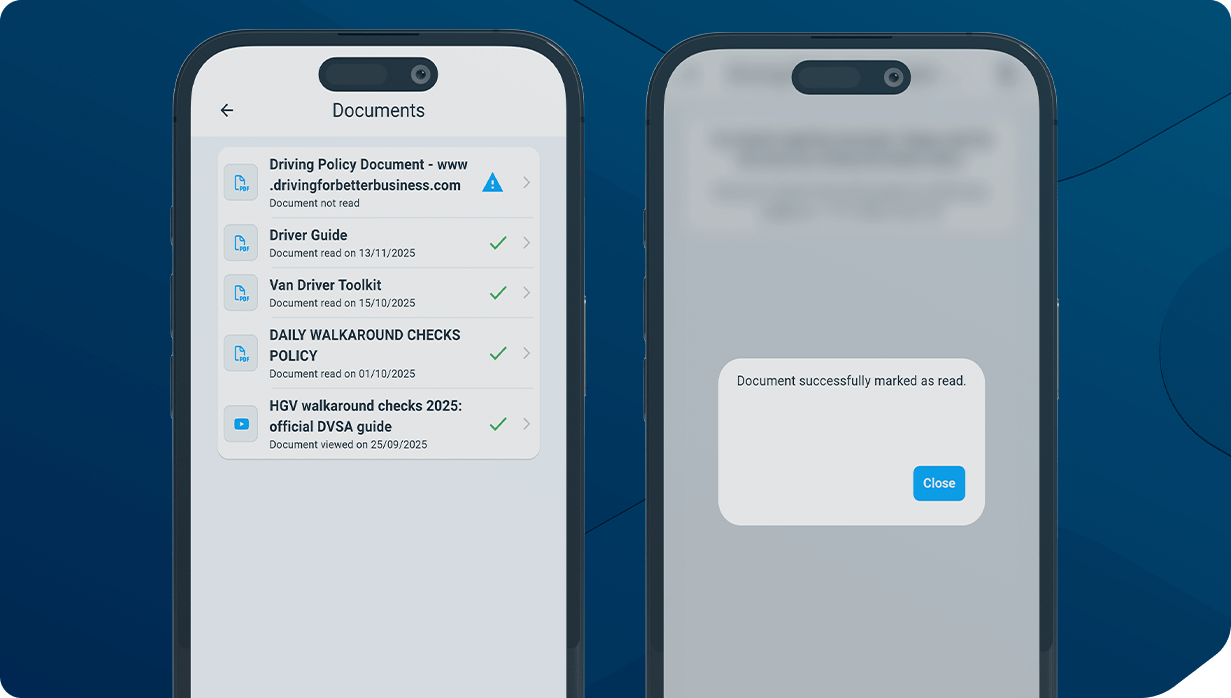
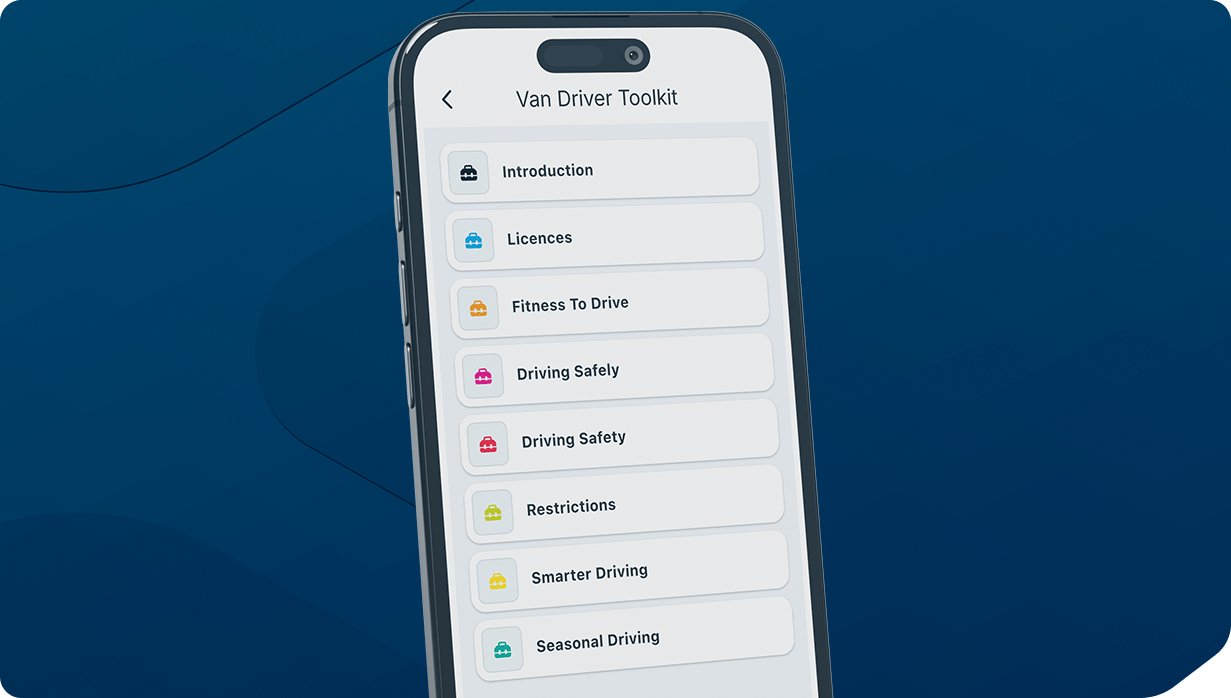
- Policies should be accessible, effectively communicated, regularly reinforced, and tailored to different audiences, ensuring clarity and engagement from boardroom to cab. Driver handbooks and regular driver safety updates, covering key risks such as pre-use vehicle checks, mobile phone distraction and fatigue management, are a valuable and effective way of reinforcing awareness and understanding of key policies. The FleetCheck Driver app includes the award-winning car and van driver safety toolkits from Driving for Better Business to make this really easy.
- You must have a reliable record of policies and updates being distributed to all your drivers, including their acceptance and agreement to comply.
- Digital fleet management systems provide reliable and robust record keeping systems with exception alerts to highlight immediate risks and help prioritise actions. They also transform data into actionable insights, helping to embed safety and accountability across the organisation. Good practice would see an engaged board of directors discussing fleet activity in depth, including collisions, and fleet costs at least quarterly but preferably, every month.

Vehicle management
Minimum legal compliance
- Vehicles must be roadworthy, taxed, insured, and MOT-certified in accordance with DVSA and Road Traffic Act requirements. This includes any privately owned vehicles used by your employees for work journeys, however infrequent that may be. Vehicles should be serviced and maintained in accordance with manufacturer guidelines.
- Your driving for work policy should remind drivers they need to complete a regular walkaround pre-use safety check and report any defects to their manager. Defects should be fixed at the earliest opportunity. Any vehicle found to have a safety-critical defect should be taken out of use until rectified.
- Maintenance records must be kept and made available for inspection if required. You should be able to confidently demonstrate the steps that were taken to ensure all vehicles were roadworthy when they started their journey. Where advisory notes have been added to an MOT certificate suggesting that issues may arise before the next test or service, (such as for worn tyres or brakes), these notes should be logged and plans made to act on them at the appropriate time.
These obligations ensure that vehicles meet the minimum standards for public road use and environmental impact at all times during the year.
Good practice
- A robust preventive maintenance programme ensures commercial vehicles remain roadworthy, safe, and compliant. By scheduling regular inspections, servicing, and component checks, it reduces the risk of mechanical failure and unexpected breakdowns. This proactive approach, made much easier with digital record management systems, supports operational reliability across the fleet, minimises unplanned vehicle off-road (VOR) time, and maintains service delivery targets.
- Specifying vans with high Euro NCAP scores and standard-fit active safety systems, such as autonomous emergency braking, blind spot indicators, and lane-keeping assist, enhances driver safety and reduces collision risk. The reduction in collisions and associated downtime and repair costs can easily mitigate any additional investment required.
- Fitting telematics and camera systems to vans improves visibility, safety, and efficiency. Real-time tracking supports route optimisation and fuel savings, while driver behaviour monitoring enhances accountability and reduces risk. According to Simon Turner from the Driving for Better Business programme, most companies that show dramatic reductions in collision rates use vehicles telematics as part of their risk management approach.
- Monitoring vehicle utilisation and mileage can benefit cost control. Ensuring the right size of vehicle for each job minimises additional risk and cost from using unnecessarily large vehicles. A significant unplanned cost can come from penalties for handing back lease vehicles with higher than agreed mileages, so monitoring mileage and rotating higher mileage vehicles to lower mileage drivers can even things out.
A compliant fleet may pass inspection – but a well-managed fleet drives down risk and cost.

Driver management
Minimum legal compliance
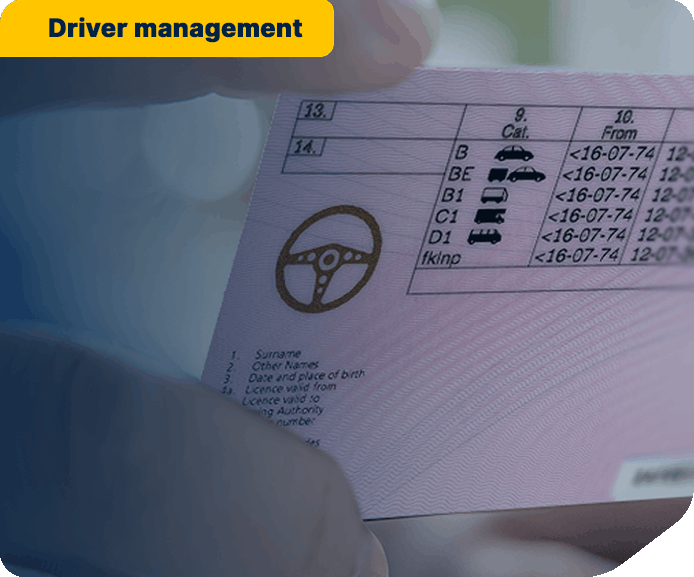
- You must know how many staff drive for work and which vehicle they are in at all times. Drivers must hold valid licences and, where applicable, Driver CPC certification.
- Employers are required to check a driver’s licence on joining the company and then again periodically to ensure they remain eligible to drive, noting any penalty points, eyesight issues, or medical conditions. Most employers make it mandatory for the driver to inform them of any convictions, collisions, or DVLA-notifiable medical conditions as this can affect the organisation’s fleet motor insurance.
- It is not acceptable to assume that a driving licence equals competence. If you are asking an employee to drive a van, to drive long distances on motorways, drive at unsociable hours, or to tow, you are legally required to ensure they are confident and competent to do so, providing additional training where necessary.
- All drivers must be fit to drive and not suffering from impairment or excessive tiredness.
- Satisfy yourself that your drivers meet the minimum eyesight requirements as laid out in the Highway Code. This is recommended to be done at least every two years.
These standards ensure that drivers are legally qualified and minimally prepared to operate vehicles safely.
Good practice
- Licence checks should be conducted online direct with the DVLA. Huge amounts of time can be saved by using an automated service such as FleetCheck LicenceAssured, it removes the risk of missed checks or anomalies slipping through the net. The FORS (Fleet Operator Recognition Scheme) standard requires, and many companies voluntarily opt for, a regime that requires licences to be checked more frequently, the more points a driver has.
- Good practice sees driver behaviour monitored through telematics systems, with those demonstrating high-risk behaviours, such as repeated harsh acceleration and braking, being given additional assessment and coaching interventions, such as online or in-vehicle training. Many companies also offer recognition or rewards for high driving standards and remaining collision free.
- Effective driver induction and engagement programmes ensure policy understanding, safety awareness, and consistent standards. Providing clear handbooks, structured onboarding, and regular toolbox talks reinforces expectations and builds a safety-first culture. Ongoing updates, feedback loops, and accessible resources help drivers stay informed, confident, and aligned with operational and compliance requirements.

Journey management
Minimum legal compliance
- Regular routes should be risk-assessed, particularly where larger vehicles may be regularly passing high-risk locations such as schools or collision hot-spots.
- Make sure that work schedules, financial incentives, or other operational requirements are realistic and reasonable and include time for rest breaks. Schedules must not encourage or require drivers to exceed speed limits or take other risks.
- Drivers should be reminded that using a hand-held mobile phone (or any device) while driving is illegal. If drivers are required to use a phone, then they need the facility to do so entirely handsfree.
- Any loads, whether internal, or external, must be within weight limits and suitably secured to prevent movement or any items leaving the vehicle. You must ensure that your drivers are aware of load limits and have been trained to load their vehicles safely, securely, and within limits.
Good practice
- Research from Brake and RoSPA indicates that fatigue is thought to be a factor in up to 1 in 5 crashes. Effective fatigue management involves structured scheduling, rest policies, and driver wellbeing support. Monitoring hours, promoting regular breaks, and using telematics to flag risky patterns helps prevent fatigue-related incidents. Training, open reporting, and cross-functional oversight embed a safety culture that prioritises alertness, compliance, and operational resilience across the fleet. If you want to understand the legal ramifications of getting fatigue management wrong, then this article from Driving for Better Business about a prosecution following a real-life fatal crash makes sober reading.
- Instigate an official policy that authorises an overnight stay at the company’s expense where journey distance or overall working/driving hours exceed a reasonable pre-determined limit. Policies should also be in place to monitor this and ensure drivers are not ignoring this offer and continuing to drive tired.
- Ban all mobile phone use when driving. While legal, the distraction and risk of a crash while using a handsfree phone is virtually identical to using a hand-held phone. Many companies ban phone use altogether and instruct staff to end a call immediately if they realised the other person is driving. There are plenty of case studies where companies have been able to take this position without it harming productivity so don’t fall into the trap of thinking business will suffer if you can’t speak to your drivers – there are workarounds to ensure your drivers are still in contact but much safer on the road.
- Contingency protocols should be developed for breakdowns, adverse weather, and emergency incidents ensuring operational continuity and driver safety. Ensure your drivers know what specific actions to take for their own safety, who to call, and what to record following a breakdown or collision.
- Consider fitting automatic axle load indicators to help drivers stay within load limits.
Compliant journey planning gets vehicles from A to B. Best practice gets them there safely, efficiently, and sustainably.
Conclusion
Legal compliance is essential, but it’s not a strategy. It’s the baseline from which best practice begins. By elevating each pillar of fleet management beyond the statutory minimum, organisations can reduce risk, improve efficiency, and enhance driver wellbeing. In a sector where margins are tight and reputational risk is high, good practice isn’t a luxury – it’s a necessity. Because when it comes to fleet safety, "just enough" is never enough.